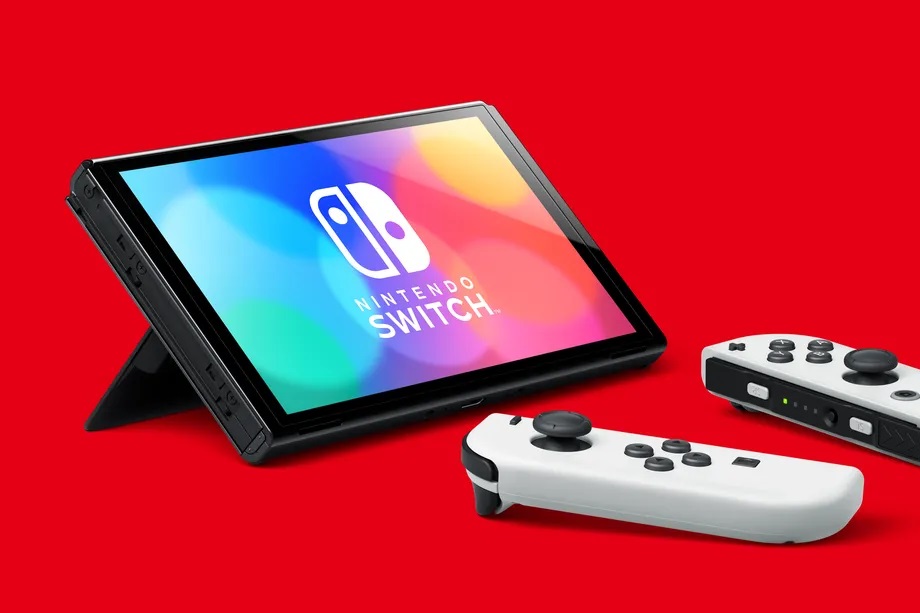
What does OLED mean for the Nintendo Switch?
July 12, 2021The new Nintendo Switch OLED model goes on sale in October for $349.
Omg, OLED. Nintendo’s new model of the Switch will have an OLED display …And not much else. Most agree that OLED looks sexy, but if you’re not up-to-date on display technologies, you might be wondering what OLED is. Here’s the low-down on the latest display tech and what it means for the Switch.
LED = Light Emitting Diode
OLED = Organic Light Emitting Diode
Organic refers to a thin layer of organic material that is sandwiched within the display:
[Diagram]
Traditionally, in LED and LCD screens, a backlight is needed to project photons from the screen to your eyes. In OLEDs, however, the light for each pixel is generated by the organic material itself, without the use of a backlight. This is referred to as being “self-emissive”.
So the first thing the “O” gives us is no backlight, resulting in a thinner, lighter display. This allows Nintendo to increase the screen size from 6.2″ to 7″, without substantially increasing the weight of the device (0.88 pounds to 0.93 pounds).
Additionally, OLED displays use less power because they produce less light. One complaint about OLED displays is that they do not appear as bright as LED/LCD displays. But this comes with improved battery life, and additional good news for nighttime gamers: OLED produces 3.1 times less blue light than a traditional screen. It is easier on the eyes.
[NEED AN IMAGE HERE]
OLED is still expensive, though, which is why it is only found in the newest devices, such as the _ and the __. There are other downsides too: OLED displays are more sensitive to water damage than traditional displays. Additionally, OLED displays are difficult to see in direct sunlight. However, they are not as sensitive to viewing angle as LED/LCD displays are — OLED displays look good from many angles.
What tech is next?
OLED is expected to eventually be beat out by MicroLED technology. MicroLED is also self-emissive, and improves upon the contrast, color control, and brightness of OLED. It is even thinner and lighter. However, MicroLED is currently unspeakably expensive, and only available to commercial consumers. As the cost of production comes down, we might see MicroLED displays start to show up at CES.
Other technologies in development: QNED, H-QLED, QD-OLED, mLED. So while we can’t be sure what the screens of the future will look like, we can be sure that we’ll be getting cryptic new acronyms for years to come.